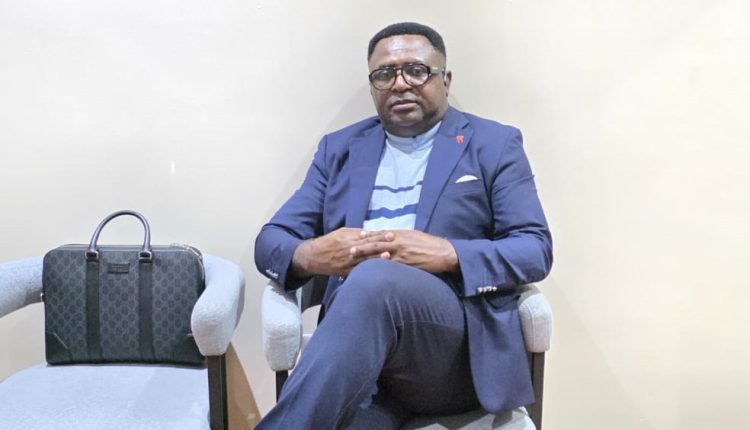
The Anglophone crisis continues to scar Cameroon. For nearly a decade, the North West and South West regions have lived to the rhythm of clashes between separatist groups and government forces. Broken lives, dispersed families, closed schools, and a suffocated local economy: the human and social toll remains heavy.
In this climate of persistent tension, some voices refuse to surrender to the fatalism of violence. Dr. David Makongo’s voice stands out as one of the most consistent. An international business lawyer, mediator, and philanthropist, he defends—against all odds—a non-violent resolution of the conflict.
Rejecting the logic of arms
From the earliest days of the crisis, Dr. Makongo publicly opposed the use of weapons as a means of advancing demands. For him, history teaches that armed conflicts prolong suffering and complicate reconciliation.
His position is clear: dialogue, negotiation, and mediation must come first. He calls on the various parties to move beyond ideological postures and adopt a pragmatic approach—one centered on protecting civilians and rebuilding social ties.
This stance—sometimes isolated in a polarized environment—has never wavered. It rests on a deep conviction: no victory won through violence guarantees lasting peace.
Humanitarian action as a foundation
Beyond words, Dr. Makongo’s commitment translates into concrete action through the Makongo Foundation for African Communities (MAFAC). The organization supports affected populations without distinction of political or community affiliation.
Classrooms have been built for refugees in Nigeria. Assistance has been provided to victims seeking asylum in Ghana. These initiatives reflect a simple philosophy: first relieve human suffering—the prerequisite for any political solution.
In a conflict marked by mistrust and mutual accusations, this humanitarian neutrality sends a strong message: human dignity is not negotiable.
Unity, the keystone to ending the crisis
In his book David Defeats Goliath—notably in the chapter Our Weapons of Battle: Unity is Strength—Dr. Makongo develops a reflection on the power of collective action. He argues that internal fragmentation is one of the main obstacles to a favorable outcome.
Divisions within Anglophone leadership, strategic rivalries, and competing ambitions have, in his view, weakened the coherence of the movement. This disunity, combined with the central government’s political strategies, has increased the vulnerability of the populations concerned.
For Dr. Makongo, unity does not mean uniformity. It means the ability to transcend individual interests in order to defend a higher common goal: peace and justice.
A vision beyond borders
Dr. Makongo’s advocacy goes beyond Cameroon’s crisis alone. It is part of a broader reflection on African mechanisms for conflict resolution. At a time when several states on the continent face internal tensions, his approach prioritizes mediation, inclusion, and collective responsibility.
His message resonates particularly with young people, weary of cycles of violence. He proposes an alternative: turn frustration into structured dialogue, and replace armed confrontation with a sustained and credible negotiation strategy.
A collective call
Cameroon stands at a crossroads. Continuing the confrontation risks entrenching divisions even further. By contrast, a sincere commitment to dialogue could open a new political chapter.
Dr. David Makongo’s voice reminds us that peace is not born from a balance of power, but from a shared will. His call for unity, compassion, and non-violence is an invitation to rethink methods and priorities.
In a region that has been deeply tested, non-violence is not a sign of weakness. It can become the founding act of a lasting reconstruction. The question remains whether the actors in the conflict will hear this path and turn hope into reality.